
The Supreme Court has scheduled a final hearing for a batch of petitions challenging the marital rape exception in Indian law. The court will examine the constitutional validity of the provision that grants immunity to husbands from prosecution for sexual acts with their wives, even under the newly enacted Bharatiya Nyaya Sanhita, 2023. This significant legal challenge follows split verdicts from High Courts and seeks to address whether such an exception aligns with fundamental rights.
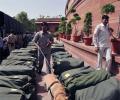
The Jammu and Kashmir Congress staged protests against the Centre over the cancellation of the NEET-UG exam, demanding strict action against those involved in the alleged paper leak and a Supreme Court-monitored probe.
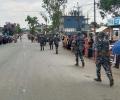
The Supreme Court has called for an expedited trial in the 2023 Manipur ethnic violence case and requested a status report from authorities, highlighting the need for confidence-building measures for victims.
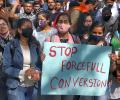
The Supreme Court has agreed to hear a plea challenging the validity of the Rajasthan Prohibition of Unlawful Conversion of Religion Act, 2025, potentially impacting religious freedom and state legislation.
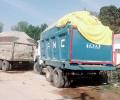
The Morena administration in Madhya Pradesh has banned sand mining and transportation from the Chambal River, along with restricting fuel sales to unregistered vehicles, following criticism from the Supreme Court regarding illegal mining activities.
The Supreme Court has decided to hear cases exclusively through video conference on Mondays and Fridays. Judges have also resolved to encourage car-pooling arrangements amongst themselves in order to ensure optimum fuel utilisation.

The Supreme Court has directed the Delhi government to assess the well-being of a child in a disputed paternity case, ensuring access to basic necessities and a minimum standard of living.

The Supreme Court has requested a response from the Manipur State Legal Authority regarding the appointment of legal aid counsel for two women allegedly paraded naked during the 2023 ethnic clashes in Manipur. This follows a plea from the CBI against the Gauhati High Court's decision to grant bail to two accused in the case.
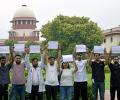
The Supreme Court has refused a plea seeking the NEET-UG 2026 re-test to be conducted in computer-based test mode, citing the National Testing Agency's existing challenges. The court has scheduled the hearing for July 27.

The Supreme Court has agreed to hear the Enforcement Directorate's plea challenging the anticipatory bail granted to Anup Majee, director of a private firm, in a money laundering case linked to alleged illegal coal excavation and pilferage.

The ruling comes against the backdrop of an intensified anti-encroachment campaign launched by the Assam government since May 2021.

The Supreme Court of India has expressed concern over media reporting in the death case of former model-turned-actor Twisha Sharma, urging restraint to ensure a fair and impartial investigation.

The Supreme Court of India has asserted its jurisdiction to determine what constitutes a superstitious practice within a religion, during a hearing on petitions related to discrimination against women at religious sites.

The Supreme Court has granted bail to a doctor arrested for allegedly tampering with blood samples in the Pune Porsche crash case, where a minor is accused of killing two people.

Asking the parties to participate in the mediation proceedings with an open mind, the apex court said they may not make any statements in the public and may not go on social media about the dispute.
The Supreme Court has refused to stay contempt proceedings initiated by the Bombay High Court against a judicial officer for an "unwarranted outburst" in court. The apex court observed that a judicial officer cannot shout at judges and deemed the officer's conduct as "gross indiscipline," advising him to tender an unconditional apology to the High Court. The High Court had initiated proceedings after the officer allegedly blamed the court administration in a high-pitched tone during a hearing on fast-track court posts.

The Supreme Court of India has granted bail to Kashmiri separatist leader Shabir Ahmed Shah, who has been in jail for over eight years in a terror funding case, citing the unlikelihood of a timely trial conclusion and the curtailment of personal liberty.

The Supreme Court has ruled that borrowers are not entitled to a personal hearing before banks classify their loan accounts as "fraud" under RBI directions, clarifying that a written response to a show-cause notice and access to the forensic audit report (with redactions) are sufficient for natural justice.

The Supreme Court has declined to issue orders prohibiting a protest march called by the Cockroach Janata Party (CJP) for September 5. The court stated its expectation that all parties would act peacefully and lawfully, directing the petitioner to a High Powered Enquiry Committee. The CJP's march aims to protest the Centre's alleged failure to honour promises made regarding examination irregularities and police violence during previous agitations.

The Supreme Court has permitted the Unnao rape survivor to become a party in the CBI's petition challenging the suspension of Kuldeep Singh Sengar's life imprisonment, affirming the victim's right to be heard in the proceedings.
The Supreme Court has sought responses from the Maharashtra government and other parties regarding a plea to fell and transplant trees for a proposed National Centre of Excellence for Animation, Visual Effects, Gaming, Comics and Extended Reality in Mumbai's Film City. The project, deemed of "eminent national importance," requires the felling of 124 trees and transplanting 333, with compensatory afforestation planned. The court's intervention follows a previous order restricting tree felling in the Aarey colony.
The Election Commission has informed the Supreme Court that over 37 lakh appeals concerning deletions or inclusions in West Bengal's electoral rolls remain pending under the Special Intensive Revision. The apex court-appointed tribunals have disposed of only a fraction of the 38.20 lakh appeals filed, prompting the Supreme Court to seek data and a plan for streamlining the adjudication process.

The Supreme Court has issued an interim directive prohibiting the unauthorised posting, reposting, or uploading of audio-video recordings of court proceedings on social media and other digital platforms. This measure comes in response to concerns over the misuse of live-streamed court videos.

The move follows an online meeting held earlier this week, where captains discussed the growing uncertainty surrounding the paused ISL season.

The Delhi High Court has sought the Delhi Police's response on student activist Sharjeel Imam's appeal for bail in a UAPA case related to the 'larger conspiracy' behind the February 2020 Delhi riots, challenging a trial court's dismissal of his plea.
The Supreme Court has clarified its interim order regarding the sharing of audio and video clips of court hearings, stating that it does not prevent news organisations from reporting on judicial proceedings. The court emphasised that while media outlets can report on legal developments, they are restricted from using audio or video recordings of the proceedings without prior permission. This clarification addresses confusion over a previous July 24 order.
The Supreme Court has ruled that the Bar Council of India (BCI) lacks the statutory authority to regulate the conduct of law students. The court clarified that disciplinary actions against students fall under the purview of their respective educational institutions, setting aside BCI notifications issued during a controversy involving NALSAR University students.
The Supreme Court has asked the CBSE to consider deferring the implementation of its three-language policy for Class 6 students, which mandates two native Indian languages, until the academic session starting 2027. The CBSE stated it would consider the suggestion. The policy, aligned with NEP-2020, makes two native Indian languages compulsory for Class 6 and Class 9, with provisions for foreign languages as additional options and no board exams for the third language in Class 10.

The Supreme Court has quashed all FIRs registered against students who protested the NEET-UG paper leak, calling it a "major victory" for dissent. The court also noted the government's commitment to formulate a pan-India compensation policy within three months for families of students who died by suicide due to the crisis. The CJP, which led the protests, welcomed the decision but vowed to monitor the policy's implementation.

Solicitor General Tushar Mehta informed the Supreme Court that an appeal would be filed against an Allahabad High Court decision that quashed the detention of Delhi University student Akriti Chaudhary under the National Security Act. The High Court had also awarded Rs 5 lakh compensation to Chaudhary and criticised the "despotic" conduct of the Gautam Buddha Nagar DM. The Supreme Court also expressed displeasure over a Greater Noida executive magistrate's notice to another student for protest participation.
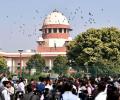
A heated exchange occurred in the Supreme Court between senior advocate S Muralidhar and Solicitor General Tushar Mehta over Mehta's use of the term "Naxalites" during a hearing on the national song Vande Mataram. Muralidhar strongly objected to the remark, demanding its withdrawal, while Mehta defended his statement, referring to an ideology rather than individuals. The bench intervened, emphasising decorum and constitutional issues.

The Supreme Court has stayed further proceedings in an FIR against Kotdwar gym operator Deepak Kumar, known as 'Mohammad Deepak', who gained prominence for confronting Bajrang Dal workers. The case stems from an incident where Deepak defended a Muslim shopkeeper, leading to a viral video and subsequent legal challenges.

TMC MP Mahua Moitra was allegedly pelted with eggs by BJP workers during a visit to Nadia district's Tehatta area, despite police presence. Moitra invoked a recent Supreme Court observation regarding her apprehension of such attacks, questioning police inaction and alleging contempt of court. The BJP has condemned the act but denied involvement.
The Supreme Court has stated it will wait for the central government's response on petitions concerning the criminalisation of marital rape before scheduling a hearing. This comes as the Centre has yet to file a substantive reply on the matter, which challenges the constitutional validity of exceptions in criminal law that protect husbands from prosecution for sexual acts with their wives. The issue involves the interpretation of Section 375 of the IPC (now replaced by Bhartiya Nyaya Sanhita) and has seen split verdicts in high courts.
The Supreme Court has indicated that its judges may personally visit the National Testing Agency (NTA) to examine its upgraded facilities aimed at preventing recurring NEET paper leaks. This unusual move underscores the court's emphasis on institutional strengthening and permanent solutions. The NTA informed the bench that it has overhauled its system, while a high-powered panel is also working on structural reforms to ensure foolproof examination processes.

Shiv Sena (UBT) leader Sanjay Raut has accused the Centre of orchestrating a political conspiracy through the CBI's FIR in the Disha Salian death case. Raut claims the probe is designed to tarnish the Thackeray family's reputation and target Aaditya Thackeray, linking it to broader political manoeuvres and an ongoing Supreme Court case.

The Supreme Court has overturned a 2017 National Green Tribunal (NGT) order that held Sri Sri Ravi Shankar's Art of Living Foundation responsible for environmental damage to the Yamuna floodplains. The court directed the Delhi Development Authority (DDA) to refund the Rs 5 crore environmental compensation deposited by the foundation and continue the floodplains' rehabilitation work.

Chief Justice of India Surya Kant has stated that allegations of "maladministration" and "favouritism" made by Supreme Court judge Justice Sandeep Mehta against Acting Chief Justice of Rajasthan High Court Sanjeev Prakash Sharma cannot be adjudicated in the public domain, emphasising that Justice Sharma must be given a fair opportunity to respond.
The Supreme Court has sought responses from the Centre and state governments on a Public Interest Litigation (PIL) advocating for the confiscation of movable and immovable property belonging to individuals and their family members involved in exam question paper leak cases. The plea also calls for invoking various anti-corruption and financial crime acts against perpetrators and suggests consecutive sentencing for such offences.

The Supreme Court has urged the Central Board of Secondary Education (CBSE) to consider exempting Class 6 students from its three-language policy for the current academic year. The policy, which mandates the study of three languages including two native Indian languages, is challenged by petitioners who question CBSE's jurisdiction over classes 6-8. The court emphasized finding a solution that avoids student pressure and suggested a potential deferral for Class 6.
